
Updated August 10, 2026
Quick answer
The hottest padel news in August 2026 is not just about tournament results. For court buyers, the useful signal is that padel is becoming more visible in major cities, more measurable through participation data, and more sensitive to site access, pricing, and community acceptance.
If you are planning a club, academy, resort, distributor showroom, or municipal sports project, this is the moment to connect market demand with practical choices: location, court model, booking price, covered versus outdoor layout, installation plan, and long-term maintenance.
1. London P1 gives the UK a Premier Padel spotlight
The International Padel Federation lists London P1 in Great Britain from August 3 to August 9, 2026, with the final scheduled for August 9. The official event page also publishes professional tournament details such as indoor court conditions, prize money, and technical setup information.
For investors, the lesson is simple: when a market receives a top-level professional event, local awareness often rises faster. That can help clubs sell beginner sessions, corporate bookings, coaching programmes, and premium court experiences after spectators first see the sport at a higher level.
2. Britain's participation data shows demand moving beyond curiosity
LTA Padel reported in May 2026 that Britain reached 1,000,000 adults and juniors playing padel, across 1,825 courts and 551 venues. It also described participation growth from 15,000 players in 2019 to a seven-figure player base in 2026.
For court buyers, this is a useful demand signal, but it should not be read as permission to build blindly. A strong project still needs a catchment-area check, clear pricing, a booking plan for peak hours, local coaching support, and enough social space to keep players returning.
3. Sydney Opera House shows padel's showpiece potential
FIP announced that the Padel Invitational presented by UBS will bring a custom-built padel court to the Northern Broadwalk of the Sydney Opera House on August 15-16, 2026, with Pat Rafter and top players involved.
This matters because padel is not only a club sport. It can also work as a high-visibility activation for landmarks, resorts, shopping districts, corporate events, and lifestyle destinations. For a buyer, the court is part of the visual experience, not only a playing surface.
4. Global numbers make padel easier for buyers to justify
In its Olympic Day update, FIP reported 38 million players across 178 countries and territories, supported by 85,000 courts and 27,000 clubs. FIP also stated that 2026 tournament broadcasts are expected across more than 240 countries.
For procurement teams, these numbers help explain why developers, hotels, municipalities, and distributors are studying padel now. The sport has enough global structure to support serious projects, but the best returns still come from the correct local business model.
5. Rising costs and public-court debate are warnings for developers
The Guardian reported public concern in London about community spaces being replaced by pay-to-play padel courts, while The Times framed rising playing costs as a potential risk for the wider boom. Together, these reports show that a fast-growing sport can still face resistance if a project is seen as expensive, exclusive, or poorly explained to local users.
For public parks, leisure centres, schools, or city projects, the court plan should include accessibility, community sessions, transparent pricing, and clear communication before installation. Padel grows better when the local community feels invited rather than displaced.
What this means for padel court buyers
Demand is easier to prove
Participation data and elite events help buyers justify a project to partners, landlords, investors, and local authorities.
Court presentation matters
Premium events show that panoramic views, lighting, turf color, branding, and spectator visibility can affect the customer experience.
Access and pricing need planning
Fast growth can create public pressure. Buyers should define peak pricing, community access, coaching, and member benefits early.
Specification must be documented
Ask suppliers for model drawings, steel profiles, glass, turf, lighting, packing, loading, and installation support before comparing price.
How ZHPADELCOURT can help
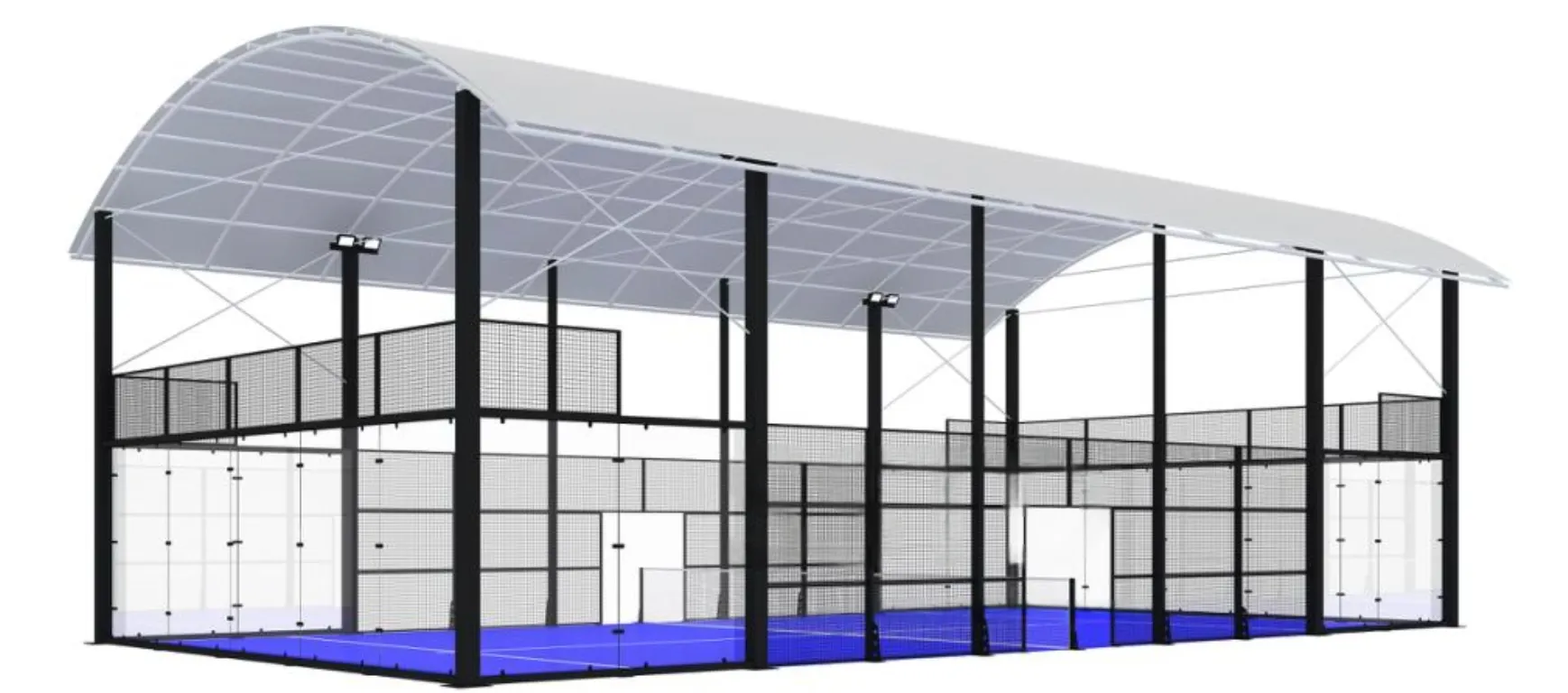
ZHPADELCOURT supports overseas padel court buyers with Standard, Panoramic, Super Panoramic, and Covered Padel Court systems. For a serious project, start by choosing the court model, then confirm the site, quantity, target country, shipping route, and installation support required.
Recommended next step
Review the court model comparison, check our factory and QC page, then send project details through the contact page for a quotation discussion.